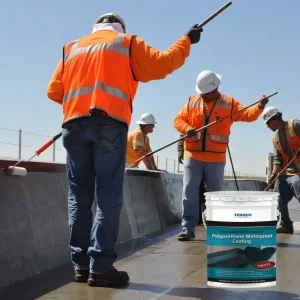
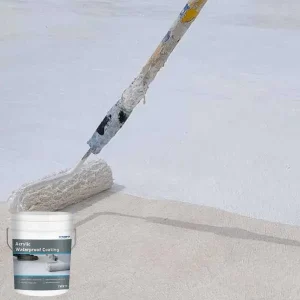
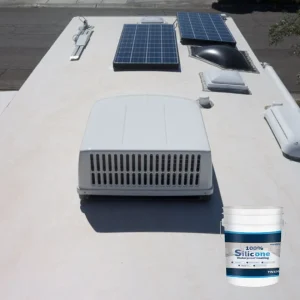
In roof waterproofing projects, issues such as blistering, delamination, or leaks are typically not caused solely by the performance of the wateproof roof coating itself, but rather by deviations in construction control. Once these problems occur, they often result in increased rework costs and project delays.
The following summarizes the most common issues encountered by contractors during roof coating application, along with corresponding preventive measures.
1. Inadequate Surface Preparation
Dust, oil, rust, or residual moisture on the substrate surface can weaken the adhesion between the coating and the substrate, leading to blistering and delamination of the waterproof coating.
2. Ignoring Environmental Conditions
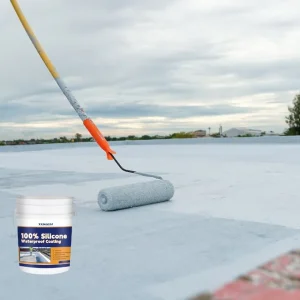
Excessively low temperatures can impair film formation, while high humidity can cause abnormal curing. Before construction, strictly adhere to the temperature and humidity ranges specified in the product’s Technical Data Sheet (TDS). For example, high-performance heat-resistant coatings (such as TW320 silicone waterproof coating) can be used over a wide temperature range, but unless otherwise explicitly stated by the manufacturer, avoid application under extreme conditions.
3. Failure to Pre-treat Joints
Most roof leaks do not originate from large coated areas but primarily from leaks at joints, screw points, and structural connections.
Prior to application, larger gaps are typically filled using construction sealant.
4. Misjudgment of the substrate
Different roof substrates (such as metal, concrete, spray foam, or existing waterproofing layers) have different requirements for waterproofing systems. Understand the substrate conditions of your project before construction.
5. Ignore post-construction inspection and maintenance
Many issues develop gradually during use, such as localized aging or fine cracking, which are difficult to detect early without regular inspections.
6. Coating applied too thinly
Applying the roof waterproofing paint too thinly can result in discontinuities in the waterproofing layer, reducing overall weather resistance and increasing the risk of future cracking or water leakage.
Adhering to the recommended application rate during construction ensures the integrity of the film and long-term stability, while also reducing future repair costs.
If you provide the roof structure type and project scale, we can assist in matching a suitable wateproof roof coating solution and providing construction parameter recommendations to help minimize construction deviations and the risk of future rework.