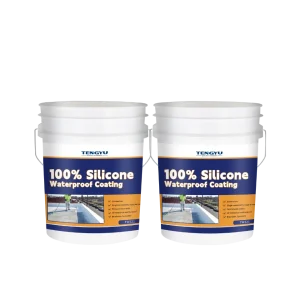
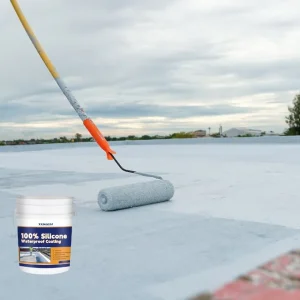
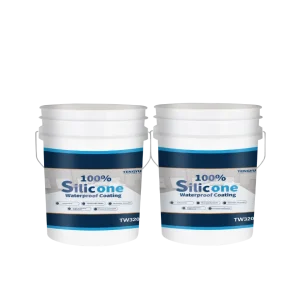
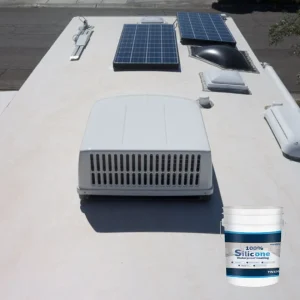
If you’re involved in roof renovation or maintenance projects, you’ve likely heard of silicone roof coatings. Widely used on hotels, apartments, and industrial buildings, they offer significant waterproofing and thermal insulation benefits. Read on to learn more! Tengyu Sealant lists 7 key advantages and disadvantages to help you choose the right waterproofing solution.
Advantages of Silicone Waterproofing Paint:
1. High Hydrophobicity
Silicone waterproof roof coatings are based on silicone polymers, forming a tough, flexible, and highly weather-resistant protective layer after application. This ensures that water does not accumulate on the roof surface.
2. High UV Reflection
Silicone roof coatings can reflect up to 80-90% of harmful UV rays, which is why they are “cool roofs.” By reflecting UV radiation, they reduce solar damage to the roof and lower building temperatures, saving thousands of dollars in cooling costs.
3. Flexibility and Weather Resistance
Liquid rubber roof coatings provide a continuous, flexible, and waterproof protective layer, resisting wind, sand, oxidation, and thermal expansion and contraction in large roofs.
4. High Solids Content
Most modern silicone coatings have high solids content, typically over 90% (Tengyu TW320 reaches 99.7%). This means less coating is needed to achieve the required dry film thickness.
If you’re facing roof leaks, water accumulation, or an aging roof, Tengyu Sealant offers a one-stop silicone roof coating solution for all types of roofs.
Need a quote for Silicone Waterproofing Paint?
Using 100% silicone coatings can save thousands in energy costs and extend the lifespan of your roof. Get a quote now and protect your building!