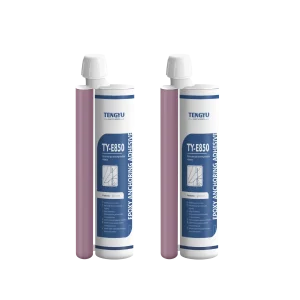
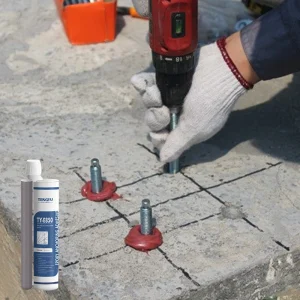
Pull-out tests evaluate the performance of rebar anchoring adhesive. They help contractors and distributors quickly assess the quality of adhesives. After Tengyu Chemical produces adhesive samples and bulk orders, they conduct pull-out tests and others on selected samples to ensure the adhesive is reliable.
What is a Pull-Out Test?
Key Factors in Evaluating Adhesive Pull-Out Tests
1. Bond Strength
This measures the adhesive’s ability to keep a secure connection with the anchor under tensile stress.
2. Anchor Movement
Minimal movement under load shows stable performance. Excessive displacement may indicate poor adhesive bonding strength.
3. Load-Bearing Capacity
The maximum force the adhesive can withstand before failure.
4. Long-Term Durability
Exposing the adhesive to sustained loads or environmental conditions tests its durability.
By combining pull-out test results with application considerations, Tengyu Крепежный клей на эпоксидной основе stand out for their high load-bearing capacity and ease of application, making them the preferred choice for engineers and contractors.
Tengyu Chemical offers multiple anchoring adhesive products tailored to diverse construction scenarios and load requirements, meeting common engineering applications:
Structural Anchoring Products Backed by Pull-Out Tests
Tengyu TY-E850 Rapid Set Anchoring Adhesive – High Load Type
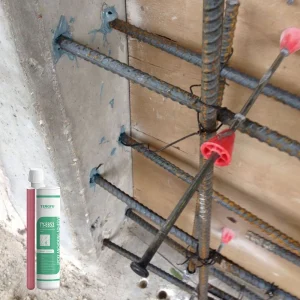
TY-E850 is a high-load epoxy anchoring adhesive with high strength, high modulus, and excellent thixotropy. It is suitable for sidewall and top anchoring.
In pull-out tests and long-term durability evaluations, TY-E850 Anchor adhesive demonstrates excellent resistance to aging and fatigue, maintaining stability particularly in humid and highly acidic/alkaline environments. It is suitable for rebar anchoring and bolting in bridges, tunnels, public structures, and other critical load-bearing areas.
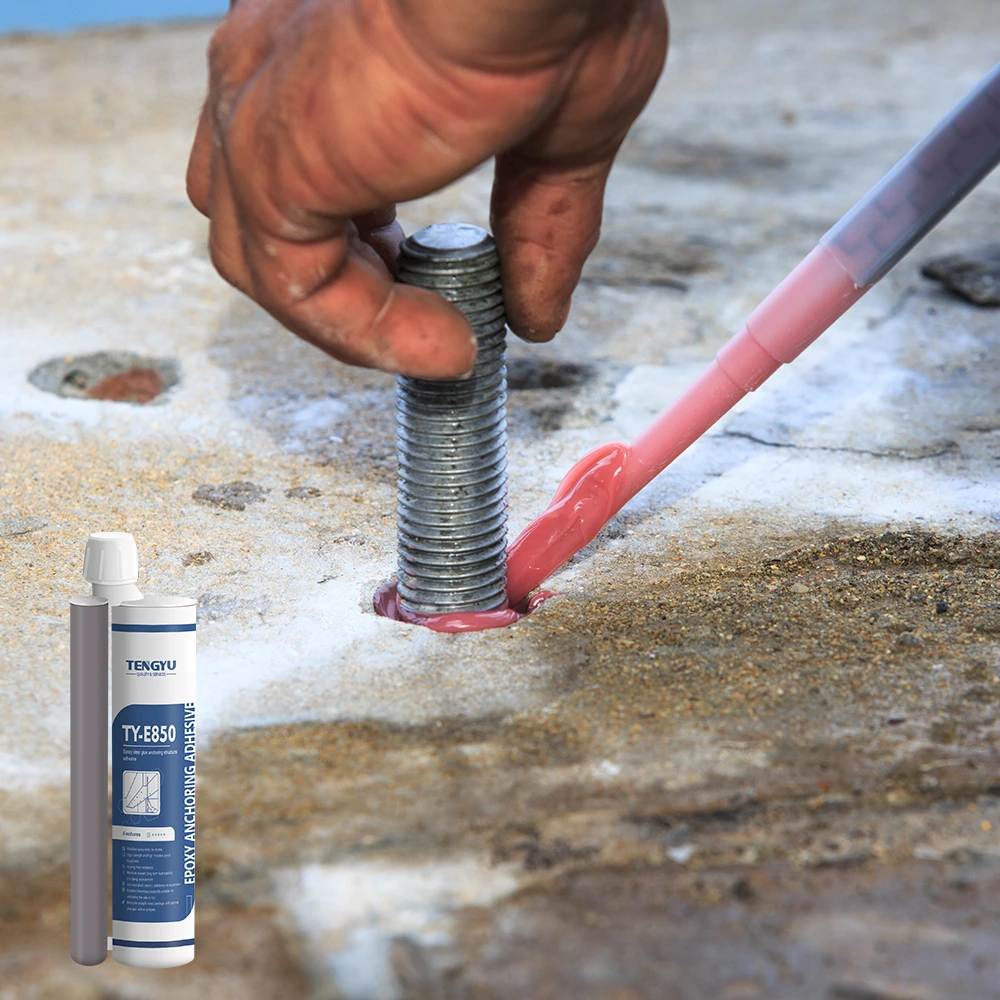
TY-E850 Fast Curing Anchoring Adhesive
Injectable chemical anchor is a fast curing, multi-purpose, two components modified epoxy resin anchor system for threaded bars and reinforcing bars
in both cracked and uncracked concrete.
Packing: 390ml/cartridge
Color: Red, etc.
Minimum Order Quantity: 300PCS
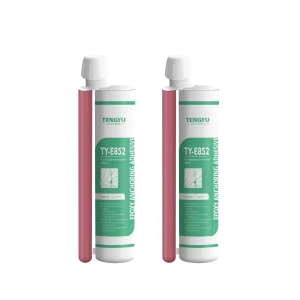
Get Your Quote!Tengyu TY-E852 Chemical Concrete Anchors – Standard Type
TY-E852 is suitable for most conventional rebar anchoring and anchoring applications. The cured adhesive exhibits excellent mechanical properties and flexibility. It offers high strength and strong adhesion performance, comparable to embedded anchors.
As the primary model for routine engineering projects, TY-E852 chemical anchor glue is widely used in curtain wall construction, reinforcement, and renovation projects.
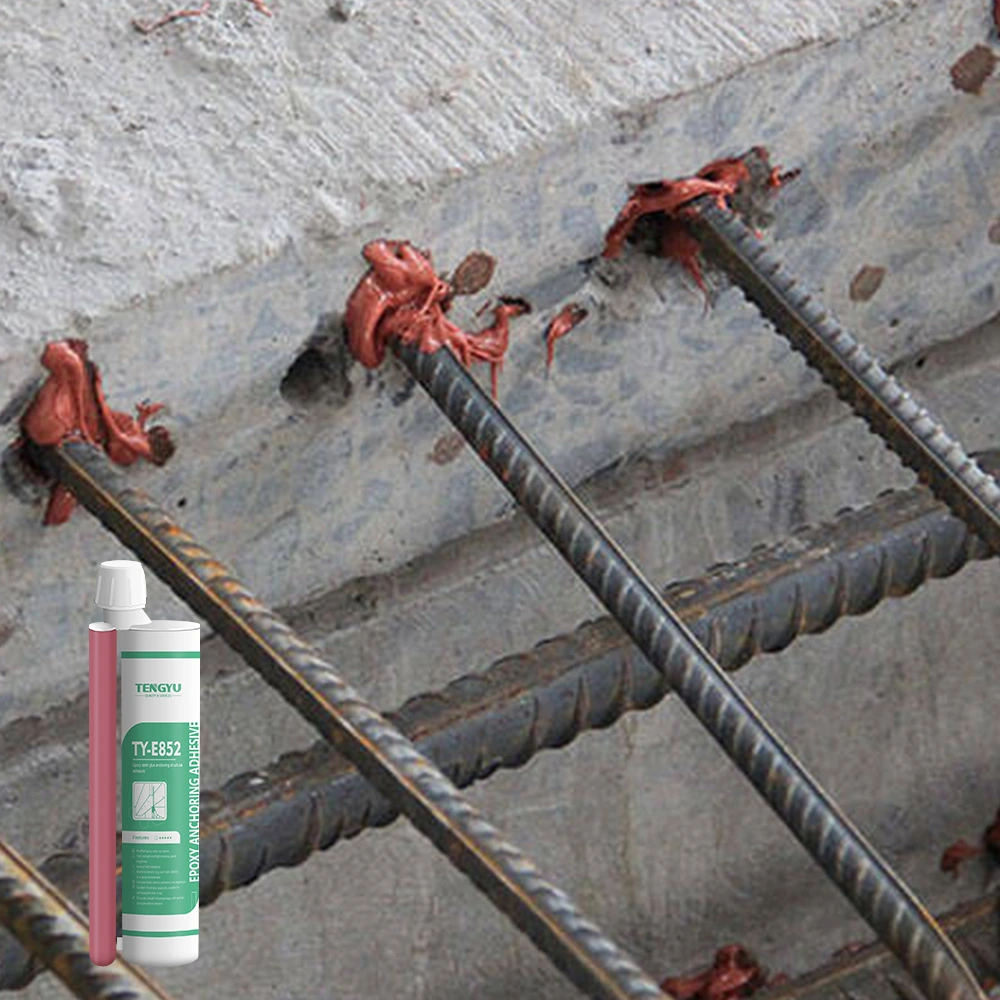
TY-E852 Rebar Anchoring Adhesive
Посадка и укоренение фигурных анкерных болтов и винтов в материале основания при строительстве навесных фасадов
Packing: 360ml/cartridge
Color: Red, Grey etc.
Minimum Order Quantity: 300PCS
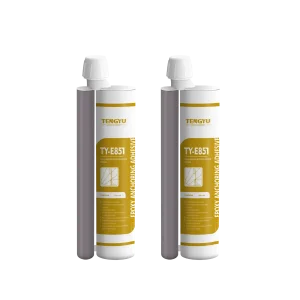
Get Your Quote!Tengyu TY-E851 Chemical Anchor Adhesive– Economical Type
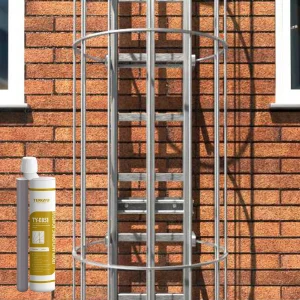
TY-E851 is an economical epoxy anchoring adhesive. It exhibits low moisture sensitivity and maintains excellent long-term load stability in humid environments. Anti-aging, good heat resistance, and no creep at ordinary temperatures. When selecting a cost-effective and high-performance adhesive for reinforcing bars for critical engineering applications, TY-E851 is the optimal choice.
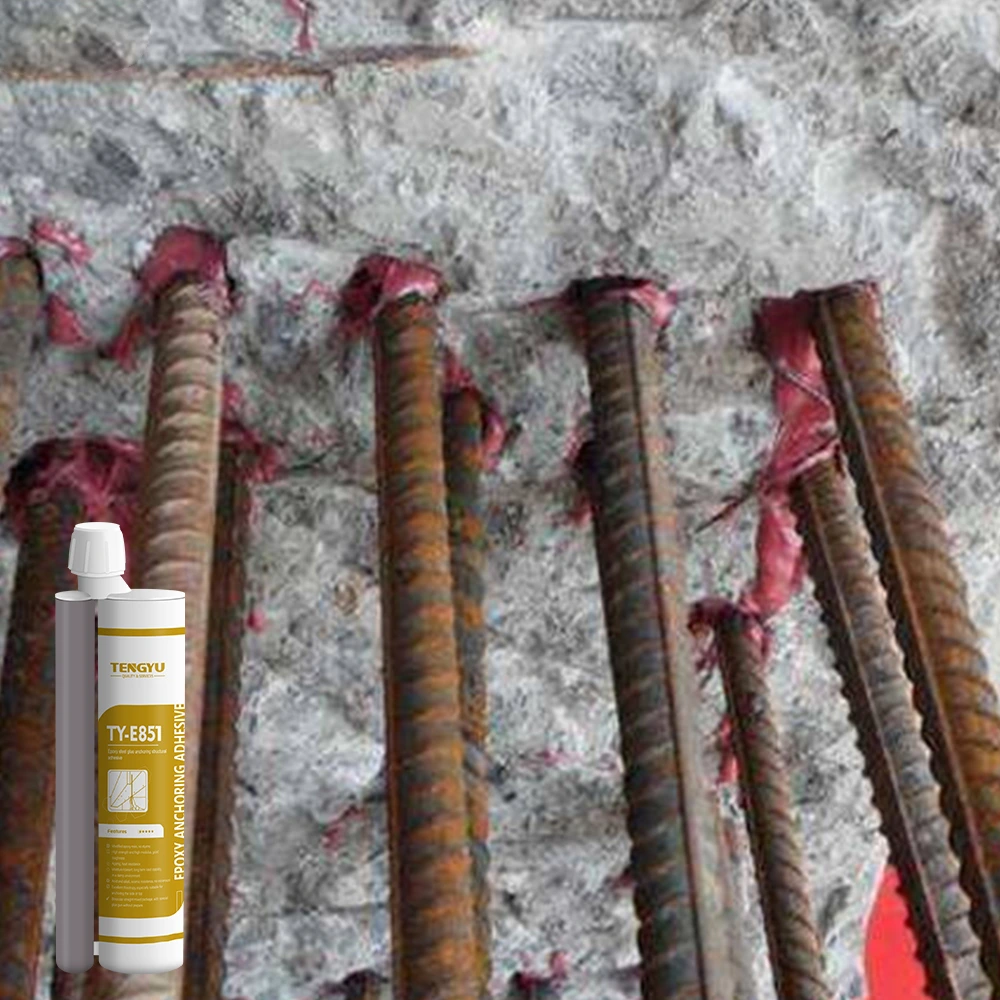
TY-E851 Epoxy Chemcial Anchor
Подходит для высокоскоростных железных дорог, автомагистралей, мостов, туннелей и метро, а также для других случаев с высокими требованиями к креплению.
Packing: 580ml/cartridge
Color: Red, Grey etc.
Minimum Order Quantity: 300PCS
Get Your Quote!Top 5 Common Mistakes in Rebar Anchoring Adhesive
1. Incorrect Drilling Depth and Dimensions
Each anchor bolt requires specific embedment depth and diameter to achieve its full load-bearing capacity in the substrate. Installers often drill to insufficient depths, failing to meet these requirements.
2. Incomplete Cleaning
Concrete dust and debris can prevent anchors from reaching proper embedment depth and reduce cured strength. Holes must be thoroughly cleaned and brushed according to the manufacturer’s instructions.
3. Water in Drilled Holes
Whether rainwater or water from cleaning operations, it easily fills drilled holes. Before cleaning the holes, all water must be removed using a vacuum cleaner or compressed air.
4. Low Temperatures
Environmental temperature affects the strength of the epoxy anchoring adhesive. It is recommended to store the anchoring adhesive in a trailer on the construction site or in a temperature-controlled environment.
5. Insufficient Curing Time
Epoxy adhesive curing times can range from 4 hours to 48 hours or longer. Do not disturb, twist, or apply any load until the adhesive has fully cured.