Chemical anchors are known for their strong bonding properties, offering unique advantages in certain situations, while mechanical anchors offer immediate load-bearing capacity and ease of use. Are you ready to explore the pros and cons of these anchoring solutions and find which best suits your project needs?
Get Best Price!What is a Chemical Anchor?
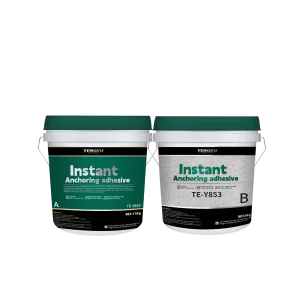
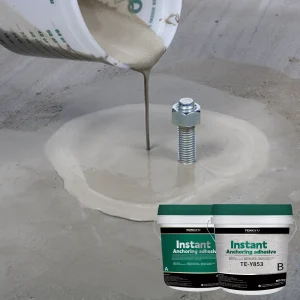
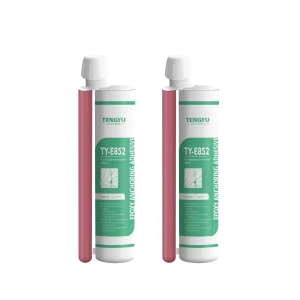
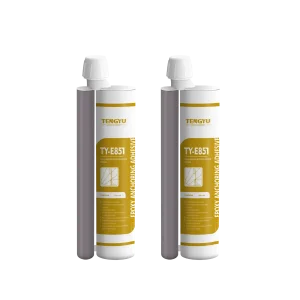
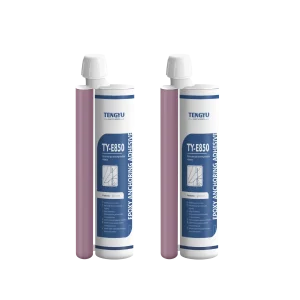
Chemical anchors use adhesive to secure bolts or rebar within a drilled hole. Composed of epoxy resin and a hardener, these compounds react chemically to form a strong adhesive. Once cured, they create a strong, durable bond between structural components, securing bolts, rods, and other fasteners in concrete and enhancing load-bearing capacity.
Advantages of Chemical Anchors For Concrete
- Resistant to acids and alkalis, with excellent shock resistance and no expansion stress.
- High strength, strong adhesion, and good toughness, comparable to pre-embedded solutions.
- Excellent aging and heat resistance, with no creep at normal temperatures.
- Low moisture sensitivity ensures long-term load stability in humid environments.
- Styrene-free modified epoxy, safe and non-toxic.
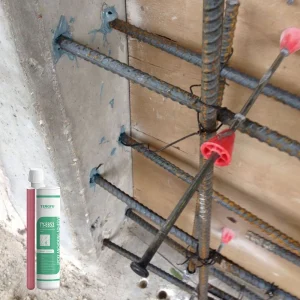
- Good thixotropy, ideal for side or overhead anchoring and reinforcement.
- Injection-type application, no manual mixing required, enabling faster construction.
Applications
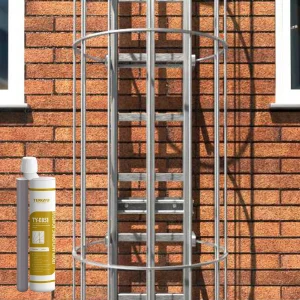
- Laying rebar and bolts in concrete structures
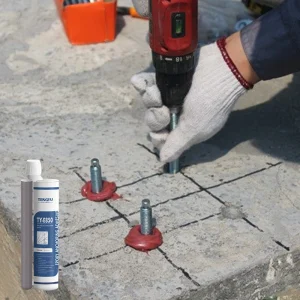
- Support for dry-hanging brackets for partition walls and stonework
- Building structure reinforcement and frame anchoring
- Foundation anchoring for various equipment
- Anchoring connections between steel and concrete structures
- Reinforcement projects for highway, bridge, and water conservancy facility reconstruction
- Reinforcement projects for billboards, noise barriers, and roadblocks
What is a Mechanical Anchor?
Mechanical anchors, on the other hand, rely on expansion, threading, or friction to secure bolts or fasteners. They secure the bolts or fasteners through friction or a keying action between the mechanical component and the concrete hole wall. Mechanical anchors are typically used for light to medium load applications, temporary installations, or projects requiring fast construction and adjustability.
Advantages of Mechanical Anchors
- No need to wait for the curing time
- Almost unaffected by ambient temperature fluctuations, suitable for construction in low-temperature environments
- Suitable for light to medium loads, allowing for adjustment or repositioning.
Applications:
- Light fixtures, handrails, guardrails, and temporary supports.
- Renovation projects and minor structural adjustments.
- Applications requiring high construction speed and adjustability.
How to Install Chemical Anchors?
Epoxy Chemical anchors: Drill → Clean → Inject glue → Insert bolt/rebar → Curing. Hole cleaning is a critical step to ensure adhesion and load-bearing capacity.
How to Install Mechanical Anchors?
Mechanical anchors: Drill a hole → Insert the anchor → Tighten the bolt → Installation complete. While installation is fast, the hole diameter and depth must be precisely controlled.
Since mechanical and chemical anchors have different properties, the choice should be tailored to the specific project requirements. If you’re unsure which method to use, please consult Tengyu Chemical. Tengyu Chemical anchor chemical company has extensive experience in production and sales and can provide you with professional technical support.