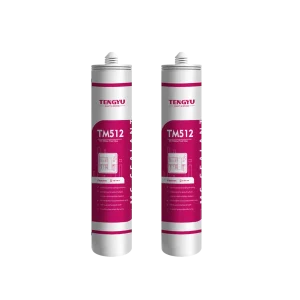
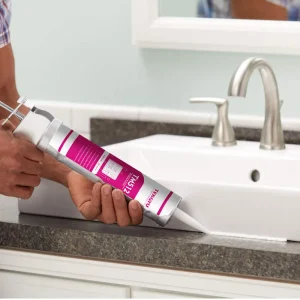
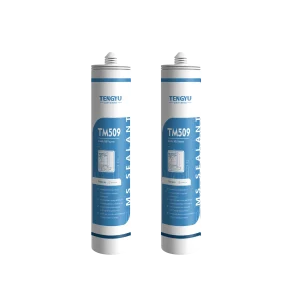
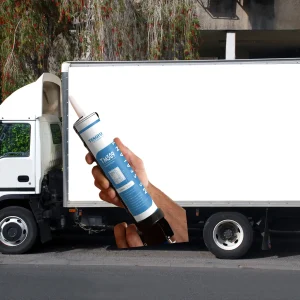
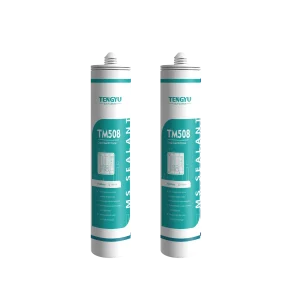
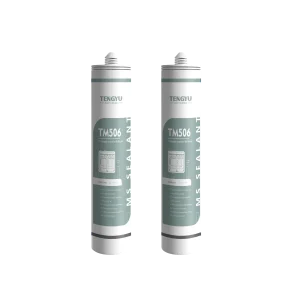
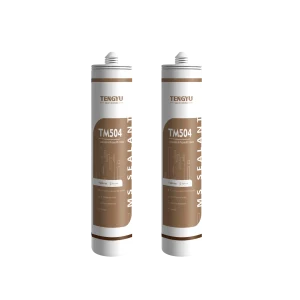
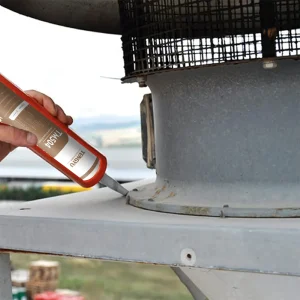
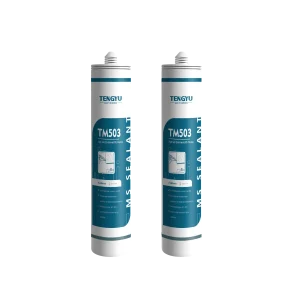
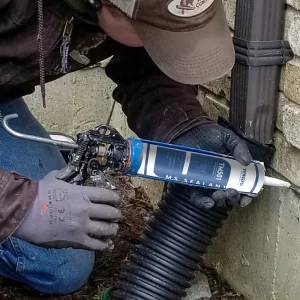
In actual procurement practice, relying solely on technical data sheets makes it difficult to determine whether ms hybrid sealants suffer from issues such as particle contamination. Many distributors employ sample testing and multi-batch comparisons to vet suppliers, thereby mitigating the risks of future customer complaints and product returns.
At Tengyu, we also recommend that our clients conduct sample testing prior to placing bulk orders. By comparing application performance and batch-to-batch stability, clients can gain a more intuitive and accurate assessment of whether the MS Polymer Hybrid Adhesives quality meets their long-term supply requirements.
Primary Causes of Particle Formation in MS Polymer Hybrid Adhesives—and the Underlying Quality Risks
1. Raw Material Quality Issues
The quality of certain raw materials may be inherently unstable or contain impurities, which can lead to the formation of particles. For instance, low-grade calcium carbonate or silicon dioxide may contain oversized particles or contaminants.
2. Inadequate Dispersion and Mixing Processes
Sealants typically incorporate fillers (such as calcium carbonate, silicon dioxide, etc.) to enhance performance or reduce production costs. If the fillers and the liquid base material are not thoroughly mixed, the microscopic filler particles can easily agglomerate. This results in uneven dispersion of the fillers within the sealant matrix, thereby giving rise to visible particles.
3. Improper Storage or Transport Conditions
Even if the product itself meets quality standards, particles may still develop due to external factors. Conditions such as high humidity, temperature fluctuations, or storage beyond the product’s shelf life can cause the sealant to degrade.
4. Insufficient Formula Stability
If the formula design is flawed—for instance, due to incompatibility between fillers and additives, or poor system stability—the sealant may eventually exhibit stratification or develop granular particles over time.
Essential Quality Control Strategies for Sealant Distributors
When purchasing sealants in bulk, the primary cause of financial loss is rarely a failure to meet specific performance parameters; rather, it is the inconsistency of quality. If a sealant product develops granular particles during application, it will very likely result in damaged brand reputation, customer complaints, or even the return of the entire batch.
1.Practical Advice for Distributors (Crucial Points)
Before placing a large-volume order, you must:
- Conduct Sample Testing: The actual smoothness during application and the final surface finish serve as the most intuitive criteria for evaluation.
- Compare Different Batches: Verify the consistency and stability of the product across different production batches.
- Check Storage Stability: Assess how environmental factors affect the product over time.
Tengyu’s Quality Management and Collaborative Advantages
If you are seeking a ms sealant supplier that delivers consistent, high-quality products, we highly recommend prioritizing Tengyu Chemical:
- Stable formula systems
- Rigorous production and filtration processes
- Robust capabilities for controlling batch-to-batch consistency
We offer support for:
- OEM / Private Label Customization
- Stable, large-volume supply capabilities
- Long-term partnership programs tailored for distributors and importers