


In automotive production and repair, car sealants are crucial to the durability and integrity of vehicles, whether bonding body panels, sealing windshield leaks, or sealing the engine. In addition to being a sealing material, automotive sealants also offer excellent water resistance, weather resistance, and aging resistance. Understanding their application is crucial for manufacturers, suppliers, and repair personnel.
1.Automotive Windshield Polyurethane Sealant
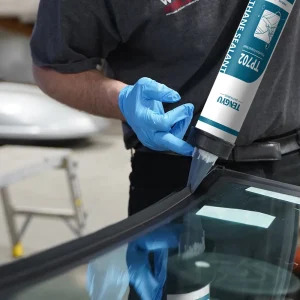
The most important sealant for windshield and window bonding is polyurethane sealant. It securely bonds the windshield to the vehicle frame, ensuring a waterproof seal and enhancing crash safety by strengthening the vehicle body structure. Besides windshields, side and rear windows also require sealants to ensure water and windproof performance. Excellent polyurethane sealants can prevent water seepage through windows during heavy rain and reduce wind noise.
Recommend:
TP702 Windshield Polyurethane Sealant is a one-component, moisture-curing, non-flowing, fast-curing polyurethane sealant specifically formulated for windshields.
2.Automotive Body Sealant
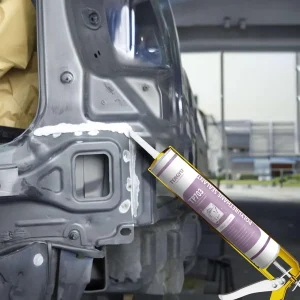
Polyurethane sealants are commonly used for sealing, joining, and sealing metal panels in vehicle bodies, ensuring waterproofing, corrosion resistance, and effective sealing. High-quality body sealants offer excellent weather resistance, water resistance, sprayability, high abrasion resistance, and tear strength. Automakers and suppliers also consider the sealant’s compatibility with the paint process and environmental standards.
Recommend:
TP703 Car bodywork sealant is a one-component polyurethane sealant. It is widely used for bonding metal parts in automotive bodies. After curing, it creates a permanent, elastic bond between the material connected to the vehicle frame. It offers waterproofing, aging resistance, corrosion resistance, and excellent bonding properties.
3.Car Engine Gasket Sealant
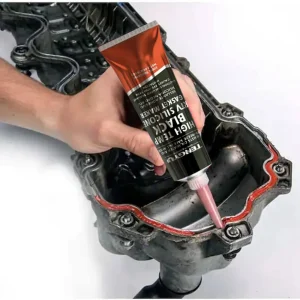
Due to the high temperature, high pressure, strong vibration, and exposure to various chemical fluids (such as engine oil, antifreeze, and fuel) in the operating environment of engines, traditional mechanical gaskets are sometimes no longer sufficient for modern automotive manufacturing. Consequently, sealants, particularly RTV sealants and anaerobic automotive thread sealants, have become a key solution for engine and powertrain sealing.
Recommend:
GT101 High temp RTV silicone sealant is a one-component silicone rubber product designed for high-torque applications. It offers superior adhesion to oily surfaces and is three times more oil-resistant than standard silicone rubber. It is heat-resistant up to 650°F (315°C) and can withstand high vibration. It is suitable for assembly as a form-in-place gasket.
In short, automotive sealants and adhesives are essential to maintaining the structural integrity, weather resistance, and aesthetics of vehicles. Their ability to bond to a wide range of materials and withstand various environmental challenges is crucial to ensuring the safety and longevity of automotive components.
Subscribe to our blog for fresh insights into adhesives in real-world applications. Or contact a professional to discuss adhesive and sealant solutions for your product challenges.